Chapter 5
Preventing Escapes
Modern Salmon Farming in BC: A Review · Version 1.0, March 2024

CHAPTER HIGHLIGHTS – PREVENTING ESCAPES

Salmon farmers routinely hear the concerns of First Nations and members of the general public that farm-raised salmon may escape and establish self-sustaining populations in British Columbia (BC), and accept the responsibility to keep farm-raised salmon contained and separated from wild salmon.
Over the past 200 years, many species of salmon and trout have been deliberately transplanted outside their natural ranges and have successfully established self-sustaining populations. These include brown trout, cutthroat trout, eastern speckled (Brook) trout, golden trout, rainbow trout, Chinook salmon, chum salmon, coho salmon, and pink salmon. Masu salmon is the only Pacific salmon that has not been successful in establishing self-sustaining populations beyond its natural range through artificial transplants. At least one species of trout or salmon is now present on every continent except for Antarctica.
All attempts to establish self-sustaining sea-run Atlantic salmon populations outside their natural range have ended in failure. Considered to be a superior game fish, significant efforts to establish Atlantic salmon occurred in South Africa, India, Australia, New Zealand, Argentina, Chile, Ecuador, Columbia, India, Indonesia, Japan, Faroe Islands and Western North America. While the factors responsible for the failures of Atlantic salmon introductions are not fully understood, a narrow tolerance for habitat conditions has been suggested to play a role.
There is no evidence of any self-sustaining Atlantic salmon populations in BC, despite almost 200 purposeful attempts to create them during the past century and incidental farm escapes that have occurred from BC salmon farms during the last five decades.
The Atlantic Salmon Watch Program (ASWP) was established in 1991 to create a database of Atlantic salmon reported or observed in the BC waters. Despite numerous river systems where adults were reported—and one report of juveniles that were presumed to be a product of wild spawning—the ASWP did not identify any evidence of established feral populations of Atlantic salmon.
In collaboration with First Nation partners, government regulators and the aquaculture supply chain, BC salmon farmers have reduced fish escapes by 97% since 2010. Given the very low levels of escapes from BC salmon farms since 2010 it is highly unlikely that future escapes would occur at a level sufficient to create a risk of establishment.
Introduction
We routinely hear that First Nations and the general public have concerns that escaped farm-raised salmon could establish self-sustaining populations and displace wild Pacific salmon. We understand the importance of preventing escapes and introducing any such risk to wild salmon. The following sections describe the history of salmon and trout movements worldwide and the actions taken by salmon farmers to prevent escapes and reach our goal of zero escapes.

Can salmon or trout establish outside their natural ranges?
It depends upon the species and habitat. Over the past 200 years, there have been numerous deliberate introductions of salmon and trout in many places worldwide. The efforts can be divided into two purposes:
to introduce a new self-sustaining population, or
to maintain some level of existing wild population abundance, regardless of reproductive success to support commercial or recreational fisheries (1).
Self-sustaining populations of brown trout (Salmo trutta), eastern speckled (Brook) trout (Salvelinus fontinalis), golden trout (Oncorhynchus aguabonita), cutthroat trout (O. clarki), pink salmon (O. gorbuscha), coho salmon (O. kisutch), rainbow trout (O. mykiss), sockeye salmon/kokanee (O. nerka) and Chinook salmon (O. tshawytscha) have been established outside their natural ranges.
Attempts to establish self-sustaining sea-run populations of Masu (cherry) salmon (O. masou) and Atlantic salmon (Salmo salar) outside their natural ranges have failed. Some of this history is explained below.
Brown trout
Brown trout, natural to Europe and Western Asia, have been successfully introduced to all continents except Antarctica (2). They are found throughout Canada except for the Yukon and the Northwest Territories.

Photo by Steel_Snorkel
Cutthroat trout
Coastal cutthroat trout naturally inhabited drainages from Alaska to northern California, and inland cutthroat trout ranged from the Rocky Mountains to Hudson Bay, southward through the Mississippi River to the Rio Grande in New Mexico.

Photo by Steel_Snorkel Cutthroat trout introductions began in the 1890s when fish from a federal hatchery in Colorado seeded fish into Lake Michigan(3). Since then, the species has been successfully introduced into eight US states, and it has hybridized with rainbow trout in Morocco (1). Attempts to seed cutthroat trout in Denmark, Sweden, and New Zealand were unsuccessful (4).
Eastern speckled (Brook) trout
While natural to eastern North America, self-sustaining brook trout populations have been established in the four western Canadian provinces, fourteen US states, New Zealand, and nineteen countries in Eurasia, Central, and South America (5).

Photo by Steel_Snorkel
Rainbow trout
Since 1874, the rainbow trout range has been extended, through introductions, to include eastern North America and the continents of Africa, Asia, Australia, New Zealand, Europe, and South America (1). The worldwide distribution of the rainbow trout attests to its inherent ability to adapt successfully to many environmental situations (5).

Photo by Steel_Snorkel
Masu salmon
Naturally found in Korea, Japan, and Russia, there have been attempts to establish masu salmon in several US states, Ontario, Chile, Germany, Nepal and Thailand. None of the transplants were successful, making masu salmon the only Pacific salmon that remains exclusive to its natural range (1).

Photo by Patrick Gijsbers/iStock
Over a span of more than 50 years, millions of Pacific salmon eggs and fry were shipped from the Pacific Northwest to regions outside the species' natural ranges. Through these introductions, self-sustaining populations of various Pacific salmon now exist in New Zealand, Chile, Maine, New Brunswick and Ontario (5). Some Pacific salmon, such as pink salmon, have secondarily expanded their ranges in northern Europe (6); this has become a serious concern for countries such as Norway (Figure 1).

Photo by Steel_Snorkel
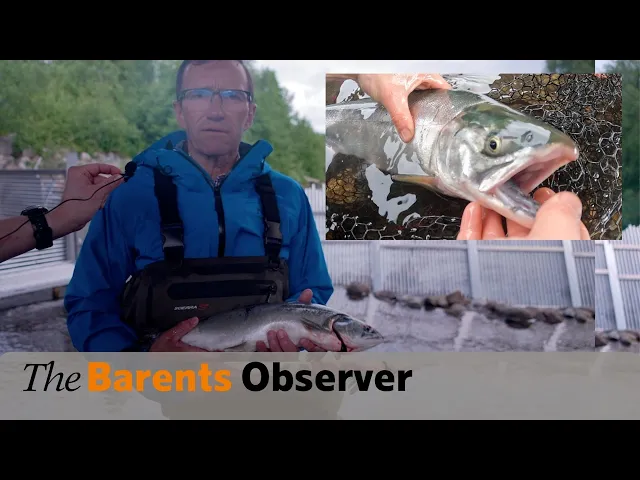
Figure 1. The Norwegian Minister of Climate and Environment explains the concern of pink salmon from the Pacific establishing in Norwegian rivers. June 30, 2023.
Source The Independent Barents Observer (7)
Atlantic salmon
As a result of its almost mythic stature as a sports fish, many attempts have been made to establish self-sustaining sea-run populations of Atlantic salmon outside their historic range: South Africa, India, Australia, New Zealand, Argentina, Chile, Ecuador, Columbia, India, Indonesia, Japan, Faroe Islands and Western North America.
Of all these attempts, introduced Atlantic salmon are now found only in the Faroe Islands (8). The Faroe Island populations' continued existence depends on significant annual enhancements that have been ongoing since 1963 (9). In New Zealand, more than 100 years of efforts failed to develop any self-sustaining populations of Atlantic salmon. The failures have been attributed to competition with rainbow trout and Chinook salmon. Several lakes in Oregon have been historically stocked with land-locked Atlantic salmon for recreational fishing; however, those efforts appear to have been discontinued.

Photo by Brian Kingzett
All attempts to establish self-sustaining sea-run populations of Atlantic salmon (Salmo salar) beyond their natural ranges have failed.
Atlantic salmon in their natural range
The historic natural range of anadromous Atlantic salmon included every country whose rivers flowed into the North Atlantic Ocean and Baltic Sea (10). In Europe, the range of the Atlantic salmon extended southward from Iceland along the Atlantic coastal drainage to Northern Portugal, including rivers in both France and Spain (11). In North America, the Atlantic salmon range extended northward from the Hudson River drainage in New York State to outer Ungava Bay in Quebec (11).
Atlantic salmon were an important food source for human populations for thousands of years. However, as human populations grew, salmon stocks began to decline due to overfishing and habitat destruction. In the UK, salmon population declines were recognized as early as 1030 AD. And by the mid-1800s, new food preservation methods, large-scale commercial fishing, and further habitat destruction/pollution had greatly accelerated these declines (12). Atlantic salmon are now extinct in Europe in several European countries, including Belgium, the Czech Republic, Germany, Luxembourg, and the Netherlands (11).
By the end of the 19th century, catastrophic declines and extinctions had been observed in the rivers of the UK, France, and many other European countries. Atlantic salmon populations in North America have experienced a similar fate.
Atlantic salmon populations in North America have experienced a similar fate. By the early 1800s, a significant fishing industry had developed, supporting thousands of commercial fishermen (13). Commercial overfishing, dam construction, and industrial pollution began to drive precipitous population declines, including extinctions in several rivers in Connecticut, Massachusetts, Maine, and New Hampshire.
Have people tried to restore Atlantic salmon to their natural range?
Yes. In Europe and North America, concern over the future of the Atlantic salmon became pronounced by the mid-19th century. Efforts to culture Atlantic salmon for restocking began as early as the 1850s in Canada, the US, and several European countries, including the UK, Norway, France, and Switzerland—with restocking activities launching in the 1870s (11).
The Government of Canada (DFO) is striving to restore and conserve wild Atlantic salmon through the Wild Atlantic Salmon Conservation Policy working with First Nations and others in eastern Canada (14, 15).

There are many organizations, researchers and volunteers actively involved in wild Atlantic salmon restoration efforts.
Salmon farmers in eastern Canada are also involved in conservation efforts. As an example, the Fundy Salmon Recovery, an association of seven partners (Parks Canada, Cooke Aquaculture, the Atlantic Canada Fish Farmers Association, the University of New Brunswick, the Province of New Brunswick, Fisheries and Oceans Canada, and Fort Folly First Nation), is working together to raise and release hundreds of wild endangered inner Bay of Fundy Atlantic salmon in hopes that these adult salmon will spawn naturally in their native rivers (16). This project is based on the hypothesis that Atlantic salmon have a better chance of survival when they are exposed to a wild environment at a young age and if they are born in the river rather than in a hatchery setting.
Historically, were there deliberate attempts to establish Atlantic salmon in BC?
Yes. British Columbia appears to have been the target of one of the world's most intensive programs of Atlantic salmon introductions. Nearly 200 introduction attempts were undertaken between 1905 and 1935—with 13.9 million eggs, alevins, fry or smolts introduced into 52 different lakes and rivers (17). These introductions were supplied with eyed eggs primarily from the Miramichi River in New Brunswick and to a lesser extent, the Thurso River in Scotland. They were then shipped to several BC hatcheries where they were hatched out and liberated at various early life stages (2).
The introductions occurred primarily on Vancouver Island, the lower Fraser River and Skeena River drainages. The Cowichan River on Vancouver Island was repeatedly stocked beginning in 1905 with hundreds of thousands of Atlantic salmon in various early life stages. Despite the magnitude of these introductions, there were only three credible catches of Atlantic salmon that may have been the product of local spawning—with all three reports occurring before 1926. Juvenile fish were also released into the Coquitlam River, Lillooet River, Harrison Lake, Campbell River, Comox Lake, Horne Lake, Nanaimo Lake, Cowichan Lake and Koksilah River. None of these introductions was successful in establishing self-sustaining runs of Atlantic salmon (2).

In the United States, there have been at least 170 attempts to establish self-sustaining Atlantic salmon populations in 34 states where Atlantic salmon were not naturally found, including Washington, Oregon, and California (17). None of these efforts were successful. In California, attempts to establish Atlantic salmon populations have been discontinued because the expectation of successful introductions is "so remote that it does not warrant the effort or expense of an attempt" (18). Even Washington State, where repeated introductions were conducted between 1904 and 1991, was unsuccessful in establishing a self-sustaining population (11). Atlantic salmon is virtually the only non-native salmonid not successfully introduced to this state (19).
One of the world’s largest efforts to deliberately establish Atlantic salmon outside their natural ranges was in BC and the USA, with more than 370 unsuccessful attempts.
Why have Atlantic salmon NOT established self-sustaining populations outside their natural range?
The ability of an animal or plant to establish outside of its natural area will depend on the characteristics of the species as well as the suitability of the environment into which it is introduced, interspecific competition, and other ecological interactions. Several factors appear to prevent Atlantic salmon from establishing in new areas:
Atlantic salmon have limited tolerances to habitat changes and are known to be weak competitors with other fish species,
escaped farm-raised fish rarely (if ever) eat in the wild; likely due to their habituation to feed pellets,
increased susceptibility to predators,
inability to hybridize with other species, and
they must be successful in a series of life history stages, including freshwater and saltwater phases.
Evidence suggests that Pacific salmon are able to establish more readily than Atlantic salmon, even in areas in which Atlantic salmon are naturally found.
Limited habitat tolerances
Organisms with very specific environmental requirements are typically poor at expanding their ranges. Relative to other fish species, Atlantic salmon have limited tolerances for habitats that differ from the conditions in which they evolved (19). For example, Atlantic salmon native to Scottish rivers have different sensitivities to habitat variables than those native to England (20). We know that Atlantic salmon that have been introduced outside their natural range into areas with presumably ‘ideal’ conditions - areas with no competitors and ample food and space - have not been able to establish self-sustaining populations.

Photo by Bill Pennell

Photo by Steel_Snorkel
Sensitivity to habitat changes is likely one of the reasons that Atlantic salmon are extinct in 84% of the rivers in New England that historically supported salmon—with populations in the remaining 16% of New England rivers in critical condition (21). Greater sensitivity to habitat changes relative to other salmonids may also be a factor in the failure to reestablish a self-sustaining population of Atlantic salmon in Lake Ontario— while non-native coho, chum, Chinook, and steelhead have been successfully introduced (19).
Sensitivities to variations in regional environmental/habitat conditions suggest that habitat deterioration could be a critical factor challenging the restoration of Atlantic salmon to rivers within their historic range. Restocking efforts that fail to include habitat restoration have been unsuccessful—while those that seek to concurrently restore habitats achieve greater success, for example liming in Norwegian rivers (22).
It has been suggested that the failure of early introductions of Atlantic salmon to produce self-sustaining populations within British Columbia could have been due to the rather primitive hatchery methods used in the early 1900s (23). However, the same methods that failed to establish Atlantic salmon proved remarkably successful in establishing brown trout, brook trout, and rainbow trout almost everywhere. Therefore, the success or failure of introduction can be associated with attributes inherent to each species rather than with the hatchery methods employed.
Given that many Pacific salmonid populations have experienced significant declines since the Atlantic salmon introductions of the early 1900s, Volpe et al. (23) suggested that suitable habitat is now less saturated with native residents—
and is, therefore, more available for successful Atlantic salmon establishment. However, attempts to reestablish self-sustaining Atlantic salmon populations within their natural range (e.g., New England)—as well as to introduce them to non-native ranges (e.g., Faroe Islands, New Zealand, Australia, South Africa)— have failed even though no self-sustaining populations of native or non-native salmon were present as competitors. By comparison, multiple other salmonid species have established self-sustaining populations in Washington State and BC.
Escaped Atlantic salmon from farms do not eat in the wild. Why not?
Atlantic salmon that escape from farm facilities appear to have little success or desire to prey on fish in freshwater or marine environments. Of the escaped Atlantic salmon recaptured in Washington freshwater environments, following a catastrophic escape from a farm in Puget Sound in 2017, all had empty stomachs and swollen gall bladders (swollen gall bladders are indicative of not eating). Similarly, observations of Atlantic salmon captured in marine waters of BC and Alaska indicated that only 2-4% had herring in their stomachs, 2-4% had commercial fish food pellets, and 1-5% of the Atlantic's captured had wood chips, kelp, or other material not recognized as food (24). This indicates that the majority of escaped farm-raised Atlantic salmon, which are trained to eat feed pellets, are not successful in finding food and likely die soon after escaping.
DFO recently completed an exhaustive study to determine if farm-raised fish predate on wild salmon fry. Over 7,000 harvest-sized Atlantic salmon stomachs were analyzed at various processing plants on Vancouver Island from 2017 – 2019 (25). Of the 7,200 farm-raised salmon sampled, only seven wild fish were found in the stomachs. Four of the seven fish were identified as herring while the other three could not be fully identified but were most likely herring. No wild salmon were observed in the stomachs of farmed fish. This study found 0.08% predation prevalence, similar to past studies on this topic (26).

Increased susceptibility to predation
Solberg et al. (27) recently presented evidence that the domestication of Atlantic salmon has permitted the evolution of increased predation susceptibility. This greater susceptibility to predation is proposed to contribute to a lower survival rate of escaped farm-raised fish versus wild fish.
Limited hybridization capacity
Atlantic salmon are genetically different from Pacific salmon. Deliberate attempts to cross-breed Atlantic salmon with chum, pink and coho salmon have failed (28). Moreover, even if a successful mating was to occur and offspring were produced, the offspring would be sterile (24).

Photo by Bill Pennell
How do salmon farmers prevent escapes?
Although history has shown the risk of establishment of escaped farm-raised fish is low in BC, salmon farmers are committed to continuously analyzing and adapting policies to achieve a target of zero escapes. The current measures to prevent escapes are depicted in Figure 2 below.
All employees at salmon farms are trained to identify situations when there may be a reason to believe that one or several fish could have left the containment. This includes:
oA sudden decrease in feed rate in a specific pen.
oHoles large enough for a fish to escape, in both the containment net and predator net.
oObserving farm-raised salmon outside any containment structure.
In these situations, staff inspect nets for holes with underwater cameras and site walk around and check in with other site staff to see if there was a handling error.
If a hole is identified, the escape net repair kit is deployed, the hole is covered and repaired immediately by the site staff and inspected by divers.

This includes:
oA sudden decrease in feed rate in a specific pen.
oHoles large enough for a fish to escape, in both the containment net and predator net.
oObserving farm-raised salmon outside any containment structure.
oIn these situations, staff inspect nets for holes with underwater cameras and site walk around and check in with other site staff to see if there was a handling error.

Figure 2. Current measures to prevent escapes at marine sites in British Columbia.
Does DFO have regulatory measures in place to prevent escapes?
Yes. DFO requires that all finfish containment systems must be able to withstand local weather and ocean conditions. Containment systems must be regularly inspected and maintained to ensure integrity and control factors contributing to failures, including biological matter buildup, ice buildup, and marine mammal interactions (29).

What happens if an escape occurs at a salmon farm?
In the event of an escape, farm staff immediately implement measures to stop further loss of fish. Relevant authorities are notified within 24 hours as per license conditions, First Nation(s) territory protocols and/or agreements, and certification schemes. All events are thoroughly investigated, and reports are provided to authorities within seven days. DFO publishes detailed reports of marine finfish aquaculture escapes in BC (30).
DFO may also approve fishing to recapture escapees, where it is deemed warranted and effective.
DFO also created the Atlantic Salmon Watch Program (ASWP) to monitor for escaped Atlantic salmon in BC rivers. To date, there is no evidence of established Atlantic salmon populations in the wild in BC.
How many escapes have there been at Atlantic salmon farms in BC?
During the industry's developmental phase (1991 - 2010), approximately 660,000 Atlantic salmon escaped from BC marine net pens and 60,000 juveniles escaped from freshwater facilities (12). During this same time period, over 600,000 Atlantic salmon escaped from Washington State (Puget Sound) marine net pens (12). These escapes were primarily due to infrastructure failure, human error, and natural causes (e.g.,weather-related, and marine mammal damage to net pens).
By 2010, the fish containment systems had evolved into integrated, technologically sophisticated production systems strategically designed, operated, and maintained to minimize fish escapes.
As a result, from 2011 to 2018, adult Atlantic salmon escapes from BC net pens decreased dramatically, averaging 12 escaped fish/year (31). In 2019, a fire at a BC farm allowed the escape of 20,973 Atlantic salmon (32). From 2020 to 2022, there were only 121 individual Atlantic salmon that escaped from farms.


How many escapes have there been at Pacific salmon farms in BC?
In total, 2,748 Chinook and 250 coho salmon have escaped from salmon farms in BC since 2012. The majority of Chinook salmon escapes were from a single event in 2012, since that time only three Chinook salmon have escaped from farms. See DFO reports of marine finfish aquaculture escapes (30). By comparison, there have been 2,790,629,000 Pacific salmon (Chinook, coho and other) released from public hatcheries in BC from 2012 – 2021. See North Pacific Anadromous Fish Commission Statistics – NPAFC (33).
Have escaped Atlantic salmon been observed in the wild in BC?
Although there have been rare observations of Atlantic salmon in the wild, no self-sustaining populations have been identified within BC.

Photo by Chris Walling aka Steel_Snorkel
Summary of observations of escaped Atlantic salmon in BC streams
In 1991, in response to concerns that escaped Atlantic salmon may establish in BC, DFO and the BC Ministry of Agriculture, Food and Fisheries established the Atlantic Salmon Watch Program (ASWP) to monitor the presence of Atlantic salmon in BC streams and marine waters. The initial phase of the program operated until 2003.
According to ASWP data, from 1991 – 2003 the total number of escaped Atlantic salmon recovered in BC marine waters was 18,876, with annual catches ranging from 31 fish in 1991 to 7,834 in 2000. During this period, a total of 1,079 adult and 367 juvenile Atlantic salmon were found in BC rivers and streams. Additionally, in 2000, Volpe et al. (34) reported finding limited numbers of presumptive wild-spawned juvenile Atlantic salmon in the Tsitika River. These findings indicated that escapees could mature reproductively and enter coastal streams where they may produce offspring.
However, to establish a self-sustaining sea-run Atlantic salmon population, these offspring would themselves have to complete an ocean migration and return to spawn viable offspring.

Photo by Chris Walling aka Steel_Snorkel
The ASWP did not find any indication that first generation Atlantic salmon had completed the life cycle—and therefore stated it found no evidence of established feral populations of Atlantic salmon (35).
In December 2010, the federal government assumed primary responsibility for regulating and managing aquaculture in BC. As the lead federal agency, DFO became responsible for regulating, monitoring, and licensing all marine finfish aquaculture operations in the province. As part of the establishment of the British Columbia Aquaculture Regulatory Program, the ASWP was reestablished to monitor the presence of Atlantic salmon in BC's marine and freshwater environments—and to undertake a focused field program to investigate whether Atlantic salmon populations had become established during the 8-year monitoring gap from 2003 to 2011.
From 2011 to 2017, the ASWP reported three confirmed Atlantic salmon caught within the BC marine environment (36).The ASWP also completed snorkel surveys of key watersheds in 2011 and 2012. The monitoring targeted water bodies in which adult Atlantic salmon (and in one instance, juveniles) had been previously identified. Snorkel survey swims of six rivers were conducted in 2011. Snorkel surveys of eight rivers considered to be of "highest risk" for the establishment of feral Atlantic salmon populations were conducted in 2012. In addition, Georgie Lake and Songhees Creek (which drains Georgie Lake) were surveyed intensely because an Atlantic salmon smolt production facility was operating on Georgie Lake—and a previous study had identified out-migrating Atlantic salmon smolts in Songhees Creek.
No Atlantic salmon of any age were identified in any of the surveys conducted as part of the ASWP field program in both 2011 and 2012. As a result of these survey efforts, it was concluded that despite the unintended introduction of both significant numbers of adult and juvenile Atlantic salmon into a number of systems in BC between 1987 and 2010, the establishment of feral populations had not occurred (37).
In 2017, the collapse of a net pen system in Washington State released between 243,000 – 263,000 Atlantic salmon into Puget Sound. In the aftermath of this escape, 43 salmon caught in BC waters were confirmed to have originated from the Washington State escape (38). The vast majority of these fish had empty stomachs and underdeveloped gonads (39).
In 2018, the ASWP confirmed that two salmon reported to their hotline were Atlantic salmon. Additionally, the ASWP conducted surveys of 14 rivers assessed to have a 'higher risk' of an establishment (including rivers where Washington State escapees had been identified in 2017 (35)). No Atlantic salmon of any age class were observed during these surveys.
Summary of observations of escaped Atlantic salmon in the Pacific Ocean
Each year in spring, professional biologists have surveyed the health of thousands of juvenile wild Pacific salmon along BC’s southern coastlines, with no reports of juvenile Atlantic salmon being observed in these health surveys. As detailed in “Chapter 10 - Caring for Wild Salmon – Sea Lice Management", the juvenile wild salmon sea lice monitoring program has occurred in 10 regions of coastal BC for up to 20 years in some regions (40-42).
No Atlantic salmon were captured amongst the 229,000 Pacific salmon sampled by DFO during trawl, purse, and beach seine surveys of Georgia Strait, the Discovery Islands, Desolation Sound, Sutil Channel and/or north Johnstone Strait over various years spanning 2010-2017 (43). The monitoring programs have found no evidence that Atlantic salmon are successfully reproducing in streams and migrating into the marine environment.

Listening and taking action

We understand we must operate with deep respect for wild salmon and the Pacific Ocean. We have listened to the concerns that escaped farm-raised salmon could displace wild Pacific salmon and have acted on those concerns by introducing strict practices and measures to minimize escapes. The good news is that very few farm-raised salmon escape and measures are working to continue to reduce the number of escapes. Since 2010, escapes from Atlantic salmon farms have declined by 97% (compared to 1991 – 2010).
It is very unlikely that Atlantic salmon will establish self-sustaining populations in British Columbia. In part, this is based upon the biology of Atlantic salmon. The species has a narrow tolerance to habitat changes and does not readily adapt to new environments. So much so, it has gone or is going extinct throughout much of its natural range in Europe and North America. Attempts to establish self-sustaining Atlantic salmon populations beyond their natural habitats, such as in BC, have failed. There is more than 100 years of documented history in the province, detailing hundreds of failed attempts by governments to deliberately establish the species here.
On the very rare occasion that farm-raised Atlantic salmon escape from a net pen, the likelihood of establishing a self-sustaining population is very low given:
oAlmost no farm-raised Atlantic salmon escape and the government has stopped all attempts to establish self-sustaining Atlantic salmon within BC. This means that there are no sources of Atlantic salmon to establish in BC.
oEscaped farm-raised Atlantic salmon would need sufficient numbers to form a breeding population; their offspring would need to be successful and of a sufficient population size large enough to sustain the population through time. This means that feral Atlantic salmon would need to consistently survive in both freshwater and marine habitats in sufficient numbers to reproduce continuously and successfully.
From 2020 to 2022, one individual Chinook salmon escaped from a farm. By comparison, in 2020 and 2021, public hatcheries in BC released 411,628,000 Pacific salmon.
oMature adult Atlantic salmon would then need to:
omigrate back to freshwater,
From 2020 to 2022, there were 121 individual Atlantic salmon that escaped from farms. Overall, this represents a 97% reduction in escapes since 2010 when DFO assumed responsibility
ofind a mate of the same species,
ospawn and produce juveniles in sufficient numbers.
oThis cycle would need to occur repeatedly to establish a self-sustaining population.
oThrough all of these steps, the salmon would need to successfully find food, evade predators, overcome competition with Pacific salmon, and know when and where to migrate.
Collectively, these steps appear to be too much for Atlantic salmon to overcome in British Columbia.
References
1. Crawford SS, Muir AM. 2008. Global introductions of salmon and trout in the genus Oncorhynchus: 1870–2007. Reviews in Fish Biology and Fisheries.18(3):313-344.10.1007/s11160-007-9079-1
2. Ginetz RMJ. 2002. On the risk of colonization by Atlantic salmon in BC waters.: BC Salmon Farmers Association. 34 p.https://salmonfarmscience.files.wordpress.com/2012/02/escapes_2002_colonization_ris k.pdf
3. Emery L. 1985. Review of fish species introduced into the Great Lakes. 1819-1974. Ann Arbor: Great Lakes Fishery Commission Technical Report. Contract No.: 45
4. Welcomme RL. 1988. International introductions of inland aquatic species. Rome: Food & Agriculture Org.
5. MacCrimmon HR, Gots BL. 1979. World Distribution of Atlantic Salmon, Salmo solar. Journal of the Fisheries Research Board of Canada.36(4):422-457.10.1139/f79-062
6. Sandlund OT, Berntsen HH, Fiske P, Kuusela J, Muladal R, Niemelä E, et al. 2019. Pink salmon in Norway: the reluctant invader. Biological Invasions.21(4):1033-1054.10.1007/s10530-018-1904-z
7. Vereykina E. "We have declared a war on Pink salmon” Norway fights the invasive species in the Arctic.: The Independent Barents Observer; 2023.https://www.youtube.com/watch?v=6oCH2zvY4m0
8. Thorstad EB, Fleming IA, McGinnity P, Soto D, Wennevik V, Whoriskey F. 2008. Incidence and impacts of escaped farmed Atlantic salmon Salmo salar in nature: Norwegian Institute for Nature Research (NINA). 110 p.http://www.fao.org/3/a-aj272e.pdf
9. NASCO. NASCO Implementation Plan for Atlantic Salmon Management in the Faroe Islands Implementation Plan Denmark (in respect of the Faroe Islands and Greenland). North Atlantic Salmon Conservation Organization.
10. COSEWIC. 2006. COSEWIC assessment and status report on the Atlantic salmon Salmo salar (Lake Ontario population) in Canada. Ottawa: Committee on the Status of Endangered Wildlife in Canada.https://www.registrelep-sararegistry.gc.ca/virtual_sara/files/cosewic/sr_atlantic_salmon_lake_ont_e.pdf
11. MacCrimmon HR, Gots BL. 1979. World Distribution of Atlantic Salmon, Salmo salar. Journal of the Fisheries Research Board of Canada.36(4):422-457.10.1139/f79-062
12. Piccolo J, Orlikowska EH. 2012. A biological risk assessment for an Atlantic salmon (Salmo salar) invasion in Alaskan waters. Aquatic Invasions.7(2):259-270,
13. Dunfield R. 1985. The Atlantic salmon in the history of North America.https://waves-vagues.dfo-mpo.gc.ca/Library/28322.pdf
14. Fisheries and Oceans Canada. 2023. Engaging on a strategy to restore and rebuild Atlantic salmon - What we Heard. Report No.: ISBN 978-0-660-49702-0.https://www.dfo-mpo.gc.ca/about-notre-sujet/publications/fisheries-peches/atlantic-salmon-heard-saumon-atlantique-entendu-eng.html
15. Fisheries and Oceans Canada. 2022. Canada’s Wild Atlantic Salmon Conservation Policy [Available from: https://www.dfo-mpo.gc.ca/reports-rapports/regs/wildsalmon-atl-saumonsauvage-eng.htm.
16. Parks Canada. 2022. Recovering Inner Bay of Fundy Atlantic Salmon Ottawa: Government of Canada; [Available from: https://parks.canada.ca/pn-np/nb/fundy/nature/conservation/saumon-salmon.
17. OECD. 2017. Consensus Document on the Biology of Atlantic Salmon (Salmo salar). PARIS: Environment Directorate Organisation for Economic Co-operation and Development. 136 p.https://one.oecd.org/document/env/jm/mono(2017)64/en/pdf
18. Dill WA, Cordone AJ. 1997. Fish bulletin 178. history and status of introduced fishes in California, 1871–1996.https://escholarship.org/uc/item/5rm0h8qg
19. Waknitz FW, Tynan TJ, Nadh CE, Iwamoto RN, Rutter LG. 2002. Review of potential impacts of Atlantic salmon culture on Puget Sound chinook salmon and Hood Canal summer-run chum salmon evolutionarily significant units NOAA. 83 p.https://repository.library.noaa.gov/view/noaa/3331
20. Hendry K, Cragg-Hine D. 2003. Ecology of the Atlantic Salmon. Peterborough: English Nature. Report No.: 185716 713 9 Contract No.: 7.http://www.english-nature.org.uk/lifeinukrivers/species/salmon.pdf
21. Smith-Tripp S. 2020. Available from: https://food-studies.net/sustainablefish/salmon/overview-salmon/.
22. Hesthagen T, Larsen BM, Fiske P. 2011. Liming restores Atlantic salmon (Salmo salar) populations in acidified Norwegian rivers. Canadian Journal of Fisheries and Aquatic Sciences.68(2):224-231.10.1139/f10-133
23. Volpe J, Anholt B, Glickman B. 2001. Competition among juvenile Atlantic salmon (Salmo salar) and steelhead (Oncorhynchus mykiss): relevance to invasion potential in British Columbia. Canadian Journal of Fisheries and Aquatic Sciences.58.10.1139/f00-209
24. Amos KH, Appleby A. 1999. Atlantic salmon in Washington State: A fish management perspective. Washington Department of Fish and Wildlife.https://wdfw.wa.gov/sites/default/files/publications/00922/wdfw00922.pdf
25. Fisheries and Oceans Canada. 2018. Wild fish predation project [Available from: https://www.dfo-mpo.gc.ca/about-notre-sujet/publications/infographics-infographies/project-predation-projet-eng.html.
26. Blascoe N. Personal Communication. Hay et al., 2004 found 0.14% in 734 Atlantic’s. Johannes and Hay, 2006 found 0.11% in 2,800 farmed chinook, coho and Atlantic salmon. As detailed by Nathan Blasco, DFO Senior Aquaculture Biologist, March 23, 2022. ed2023
27. Solberg MF, Robertsen G, Sundt-Hansen LE, Hindar K, Glover KA. 2020. Domestication leads to increased predation susceptibility. Scientific Reports.10(1):1929.10.1038/s41598-020-58661-9
28. Cubitt KF, Butterworth KG, Finstad B, Huntingford F, McKinley RS. 2006. Escaped farmed salmon: a threat to BC’s wild salmon. Fraser Institute Alert Series:9, https://www.fraserinstitute.org/sites/default/files/Escaped_Farmed_Salmon.pdf
29. Fisheries and Oceans Canada. 2023. Marine finfish B.C. aquaculture licence and conditions of licence. Nanaimo: Government of Canada.https://www.pac.dfo-mpo.gc.ca/aquaculture/licence-permis/docs/licence-cond-permis-mar/index-eng.html
30. Open Government. 2024. Escapes of cultured finfish from BC aquaculture sites Ottawa: Government of Canada; [Available from: https://open.canada.ca/data/en/dataset/691dd994-4911-433d-b3b6-00349ba9f24e.
31. Fisheries and Oceans Canada. 2020. Escapes of cultured marine finfish from BC aquaculture sites [Available from: https://open.canada.ca/data/en/dataset/691dd994-4911-433d-b3b6-00349ba9f24e.
32. Mowi Canada West. 2019. Available from: https://mowi.com/caw/blog/2019/12/21/news-release-incident-at-robertson-island-causes-potential-fish-escape/.
33. North Pacific Anadromous Fish Commission. 2023. NPAFC Statistics: Pacific Salmonid Catch and Hatchery Release Data: North Pacific Anadromous Fish Commission,; [Available from: https://www.npafc.org/statistics/.
34. Volpe JP, Taylor EB, Rimmer DW, Glickman BW. 2000. Evidence of Natural Reproduction of Aquaculture-Escaped Atlantic Salmon in a Coastal British Columbia River. Conservation Biology.14(3):899-903.https://doi.org/10.1046/j.1523-1739.2000.99194.x
35. Andres B. 2020. Head, Atlantic Salmon Watch Program. Personal communication.
36. Plummer E. 2017. ‘Incompetent’ farmed salmon remain on DFO’s radar. wwwhashilthsacom [Internet]. (December 12, 2017). Available from: https://hashilthsa.com/news/2017-12-12/incompetent-farmed-salmon-remain-dfos-radar.
37. Andres B. 2015. Summary of reported Atlantic salmon (salmo salar) catches and sightings in British Columbia and results of field work conducted in 2011 and 2012. Campbell River, BC: Fisheries and Oceans Canada. Contract No.: 3061.https://waves-vagues.dfo-mpo.gc.ca/Library/357053.pdf
38. Fisheries and Oceans Canada. 2017. Atlantic Salmon Aquaculture Incident in Washington State [Available from: https://www.canada.ca/en/fisheries-oceans/news/2017/08/atlantic_salmon_aquacultureincidentinwashingtonstate.html.
39. Plummer E. DFO monitoring finds farmed Atlantic salmon “unlikely” to breed in B.C. waters. wwwhashilthsacom2017.https://hashilthsa.com/news/2017-11-15/dfo-monitoring-finds-farmed-atlantic-salmon-unlikely-breed-bc-waters
40. Grieg Seafood British Columbia. 2023. Wild Pacific salmon: Grieg Seafood ASA; [Available from: https://griegseafood.com/bc-wild-pacific-salmon.
41. MOWI. 2023. Juvenile Wild Salmon Sea Lice Monitoring: MOWI Canada West; [Available from: https://mowi.com/caw/sustainability/wild-salmonid-lice-monitoring/.
42. Cermaq Canada. 2023. Sea lice reporting: Cermaq; [Available from: https://www.cermaq.ca/public-trust/sea-lice-reporting.
43. Neville C, Johnson S, Beacham T, Whitehouse T, Tadey J, Trudel M. 2016. Initial estimates from an integrated study examining the residence period and migration timing of juvenile sockeye salmon from the Fraser River through coastal waters of British Columbia. 45-60 p
Cite this chapter: BC Salmon Farmers Association. 2024. Caring for wild salmon: Preventing escapes in Modern Salmon Farming in BC: A Review. BC Salmon Farmers Association, Campbell River, British Columbia. 24 pages. available at www.bcsalmonfarmers.ca